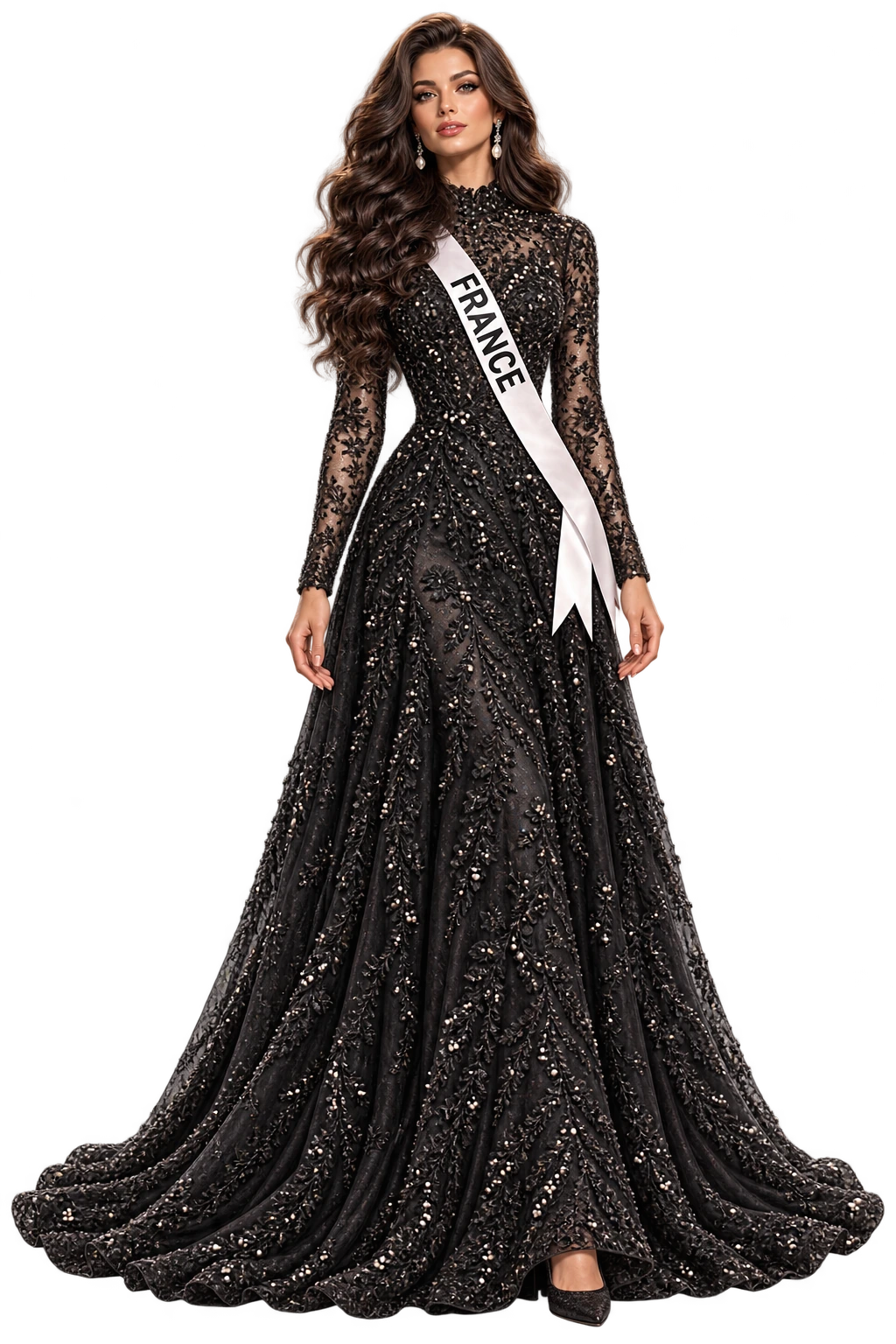
The evening gown round often looks effortless from the audience. What viewers don't see is the preparation: fitting the dress, learning the route, deciding where to pause, and walking until the movement feels comfortable.
Whether you're preparing for a real pageant or studying runway presentation for fun, one principle helps: the gown should support the person wearing it, not demand all their attention.
1. Begin with fit, not price
A garment that catches under the heel or requires constant adjustments will make movement harder. Check the hem length with the shoes you plan to wear, practice sitting and turning, and rehearse a few steps at different speeds. Good fit doesn't require the most expensive dress.
American Miss specifically advises contestants to ensure evening gowns aren't too long and notes that presentation includes qualities such as poise, grace and confidence. That is sensible rehearsal advice even outside that program.
2. Study the stage
Before practicing, find out whether the route is straight, includes a turn, or has multiple marked positions. If a stage diagram exists, use it. Your rehearsal should match the actual path, with enough room around decorations, cameras and other performers.
3. Build a simple five-part walk
- Entrance: Arrive upright and steady. Let the first step settle before you speed up.
- Approach: Choose a comfortable pace that suits the hem and footwear.
- Pause: Hold an intentional moment at the marked spot instead of fidgeting.
- Turn: Rotate safely and smoothly, allowing the gown to follow.
- Exit: Stay present until you've left the visible stage.
That sequence is a practice tool, not a mandatory pageant choreography. Always follow the actual organizer's blocking.
4. Practice with the real outfit when possible
Practicing in flat shoes and then switching to unfamiliar heels changes balance and timing. Try on the full outfit and practice in a safe space before a formal rehearsal. If a hem, shoe or accessory causes problems, adjust it before the event rather than hoping the problem will vanish under stage lights.
5. Use the camera as a coach, not a judge
A short rehearsal recording can reveal pacing, rushed turns or awkward pauses. Review it for practical changes rather than appearance perfection. Focus on where your eyes go, whether your arms move naturally, and whether you look comfortable in the garment.
6. Leave room for the unexpected
Stage conditions change. A spotlight may be brighter than expected, the music may be faster, or the floor may feel different. Plan a comfortable walk and a simple recovery: keep moving calmly when safe, regain your place, and don't treat a tiny mistake as the end of the performance.
7. Remember the bigger competition
An evening gown presentation can be one component of a wider pageant. It may carry a substantial share of the score, but other programs use interviews, talent, or additional rounds. Know the actual rules before spending all your preparation time on a single category.
Why the game's gown round is a different kind of challenge
ROAD TO THE CROWN uses distinct mini-games for the evening gown section, including spatial route planning, timing and strategic choices. That design invites players to think about presentation instead of simply matching outfits. It is stylized entertainment, not physical runway instruction.
American Miss · Evening Gown Advice and Judging ↗
Miss America · Competition Scoring ↗
Enjoyed the read? Meet our fictional delegates, explore the universe and try a free in-browser challenge.